
On November 18, at the 9th International Photovoltaic and Energy Storage Industry Conference in 2026, Tongwei officially released the "Tongwei Belief Photovoltaic System-level Solution". If the scheme is promoted on a large scale, it is expected to provide a feasible solution to the current predicament of the industry. The existing photovoltaic projects in the market and the new photovoltaic projects in the future will become stable power sources with roughly the same characteristics as traditional energy sources under the new technology system. The pilot project will be connected to the grid in November this year. On the day of the signing ceremony
of the strategic cooperation
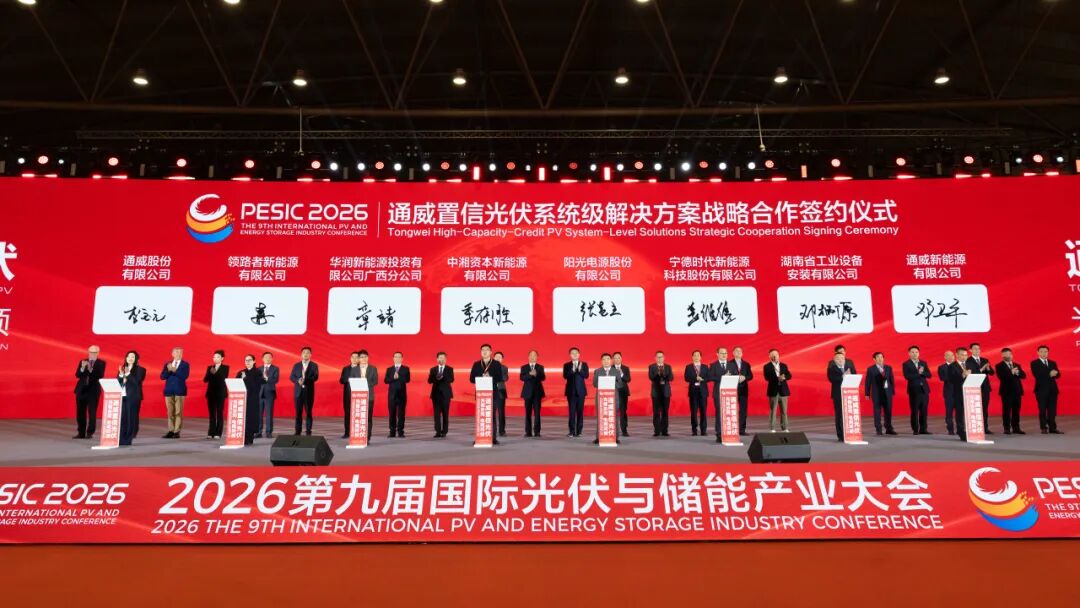
of Tongwei Belief Photovoltaic System-level Solutions, Tongwei has signed strategic cooperation agreements with leading industrial chain enterprises such as Ningde Times, Sunshine Power Supply , Huarun New Energy, Zhongxiang Capital, Hunan Industrial Equipment Installation Company and Leader New Energy. The contract covers key links such as energy storage battery, inverter control, energy investment, industrial capital and power engineering, and forms a complete cooperation matrix from technology research and development, scenario application to capital operation and project delivery. All parties will carry out in-depth collaboration around the design, construction, operation and asset securitization of the photovoltaic system, promote the large-scale implementation of the scheme in new and stock projects, and jointly build a new ecosystem of photovoltaic storage across energy, finance and manufacturing. Speaking to Haiping, deputy director of
China Society of Hydropower Engineering and chief expert of China Energy Research Association, he said that from January to September this year, the new photovoltaic installed capacity in China decreased by 53.87% compared with the same period last year, and the new photovoltaic installed capacity in the whole year may show the first negative growth in recent years, with a large number of light abandonment superimposed, the industry suffered a "double drop in volume and price", and the development is facing greater pressure. In order to promote the sustainable and high-quality development of the new energy industry, he suggested that we should continue to support the pilot demonstration of new technologies and new models, and promote the new technologies and new models that can significantly improve the confidence level of new energy in an orderly manner in accordance with the principle of "pilot first, summary and evaluation, and steady promotion". Addressing Haiping, deputy chairman of the
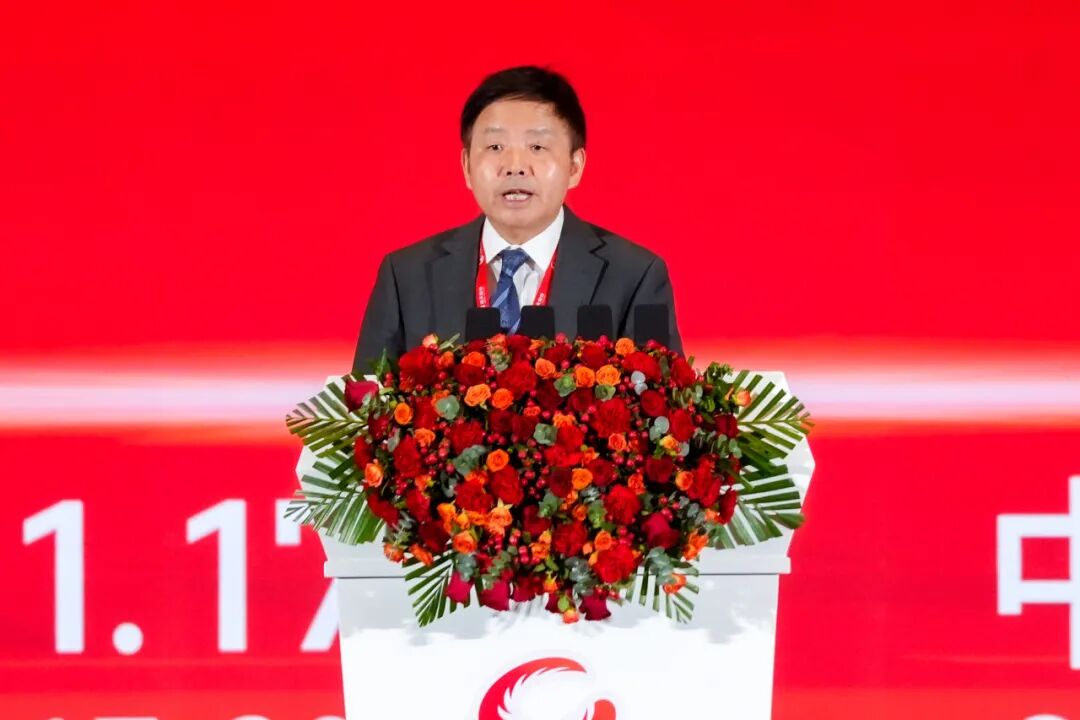
China Society of Hydropower Engineering, chief expert of the China Energy Research Association, Liu Hanyuan, deputy chairman of the
National People's Congress, vice-chairman of the All-China Federation of Industry and Commerce and chairman of the Board of Directors of Tongwei Group, said that at present, the global carbon neutralization process is advancing in depth, with less than 25 years to go before the goal of energy transformation. More than 90% of the transformation tasks still need to be implemented. At present, China's renewable energy has achieved rapid development, and the target of photovoltaic and wind power installation in 2030 has been completed six years ahead of schedule. Internally, however, fossil energy still accounts for 80% of China's primary energy consumption, while non-fossil energy accounts for just over 20%. There is still a huge room for improvement in the strength and speed of China's energy transformation. According to estimates, in order to achieve carbon neutrality in the next 25-35 years, that is, 2050-2060 years, China needs to add 500 million to 700 million kilowatts of photovoltaic installed capacity every year. If the country needs it, it can achieve carbon neutrality as soon as 10-15 years, that is, from 2035 to 2040, only relying on the existing domestic photovoltaic capacity. In 2025, the installed capacity of photovoltaic power generation in China will be increased by 315 million kilowatts, and there is still more than twice the potential to digest the current stage capacity. If the newly installed capacity is increased to 500 million to 700 million kilowatts, it will immediately help the photovoltaic industry to quickly break away from the current excessive "involution" and promote better and faster economic and social development. Therefore, China's energy transformation should be fast rather than slow. China's photovoltaic, wind power and energy storage technologies are mature enough, the production capacity is enough to support, and the cost is economical enough to support larger-scale domestic installed applications. Liu Hanyuan, deputy to
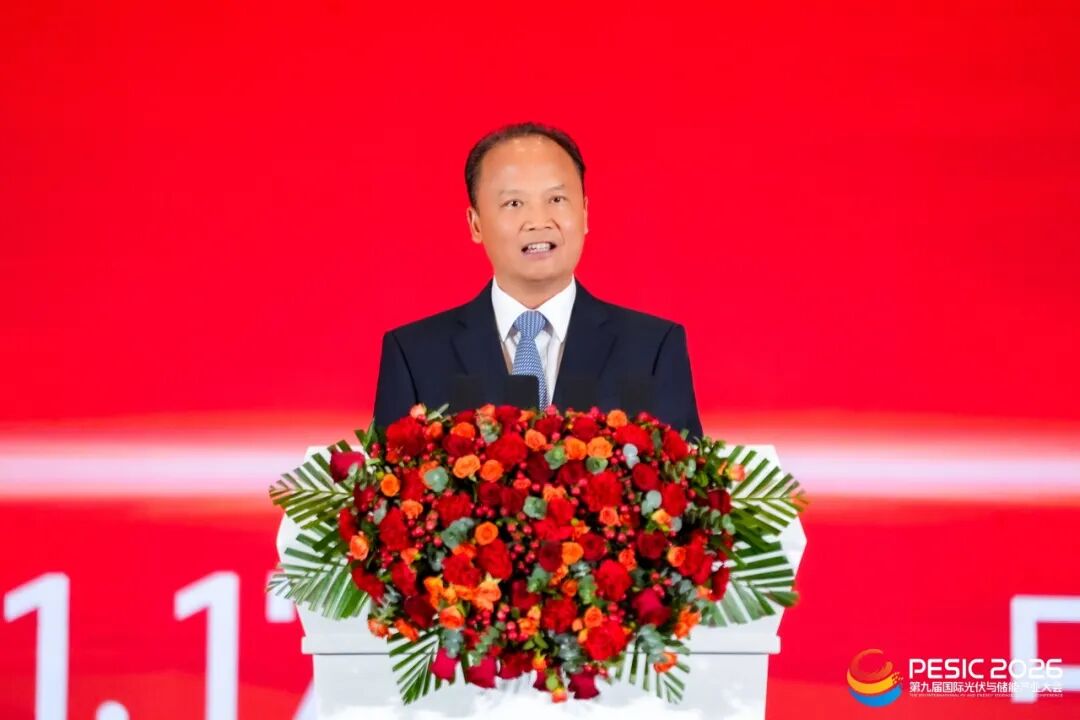
the National People's Congress and vice-chairman of the All-China Federation of Industry and Commerce, delivered a speech to
the board of directors of Tongwei Group. Chairman Liu Hanyuan said that in the past two years, due to multiple factors such as periodic mismatch between supply and demand and geopolitical conflicts, "involution" competition has intensified and industrial development has encountered greater challenges. In this regard, the relevant departments of the state have organized many symposiums for trade associations and major enterprises to strengthen the work of "anti-involution". But up to now, the dawn of reversal has not yet appeared, and the pressure of "involution" still exists. In this context, relying on years of experience in the development and operation of photovoltaic power plants, Tongwei technical team has innovatively developed a new set of optical storage integration solutions. This mode breaks through the inherent bottleneck of traditional photovoltaic power generation and can achieve the confidence output comparable to thermal power, so it is called "confidence photovoltaic". Its principle is based on the existing photovoltaic projects, under the premise of unchanged network points, the installed capacity of photovoltaic on the DC side is expanded to twice to several times of the original, and according to the redundant power generation capacity, the corresponding size of energy storage is equipped to achieve the effect of peak shaving, valley filling and stable output. If this scheme is promoted on a large scale, it is expected to provide a feasible solution to the current predicament of the industry. Existing photovoltaic projects in the market and new photovoltaic projects in the future will become stable power sources comparable to traditional energy sources under the new technology system. The advantages of
"confidence photovoltaic" are mainly reflected in four aspects, one is from "fluctuating power supply" to "stable power supply". Especially in the evening rush hour, the system can also generate electricity steadily, from the basic "zero contribution" in the evening in the past to the reliable power supply of the power grid; Second, the hours of power generation have increased substantially. The annual power generation hours of the project can reach 3000-4000 hours, which is close to the level of thermal power; third, the utilization rate of equipment and system efficiency are higher; fourth, the income level is effectively improved, and the enthusiasm of market investment in photovoltaic and energy storage will be rekindled. Through the effective matching of technology and policy resources, as well as the effective access of financial products and derivatives, the domestic market can be effectively restarted in 3-6 months at the soonest, and it can sustain development and virtuous circle, help the industry quickly break away from the quagmire of excessive "involution", accelerate the process of energy transformation, and strongly support the "double carbon" target landing, and promote better and faster economic development.
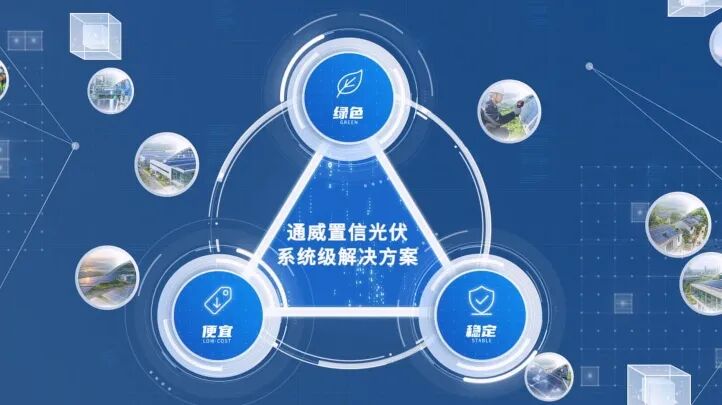
Tongwei believes in photovoltaic system-level solutions, which completely breaks the "impossible triangle" of energy. Let photovoltaic power generation from daytime to stable, dispatchable, 24-hour all-weather delivery power supply, making it possible to be safe, reliable, green and cheap. Under the different scenarios of 5000-8000 hours of weak power grid and 3000-5000 hours of strong power grid, the traditional bottleneck is broken through in an all-round way, so that the power station is not only a system, but also a value-added and reliable green asset. At present, Tongwei's photovoltaic system-level solution has mature scenario adaptability and quantitative value verification. The scheme covers a wide range of scenarios, such as farming, animal husbandry, fishing, Shagao wasteland base, industrial and commercial park and so on. Measured data show that in areas with suitable conditions, the overall rate of return of stock technological transformation projects applying this scheme can be increased by more than 3 percentage points; in new projects with high redundancy configuration, the synergistic effect of photovoltaic and storage is further enlarged, and the room for income improvement is more significant. This data strongly proves that "system-level innovation" is the best way to cross the industry cycle and achieve "value leadership".


 浙公网安备33010802003254号